Metrology & Inspection
We have established a complete precision metrology system to ensure that all processed products are traceable and verifiable, providing irrefutable quality proof for every optical component.
From optical design to delivery, our testing data is integrated
throughout the entire quality management cycle.
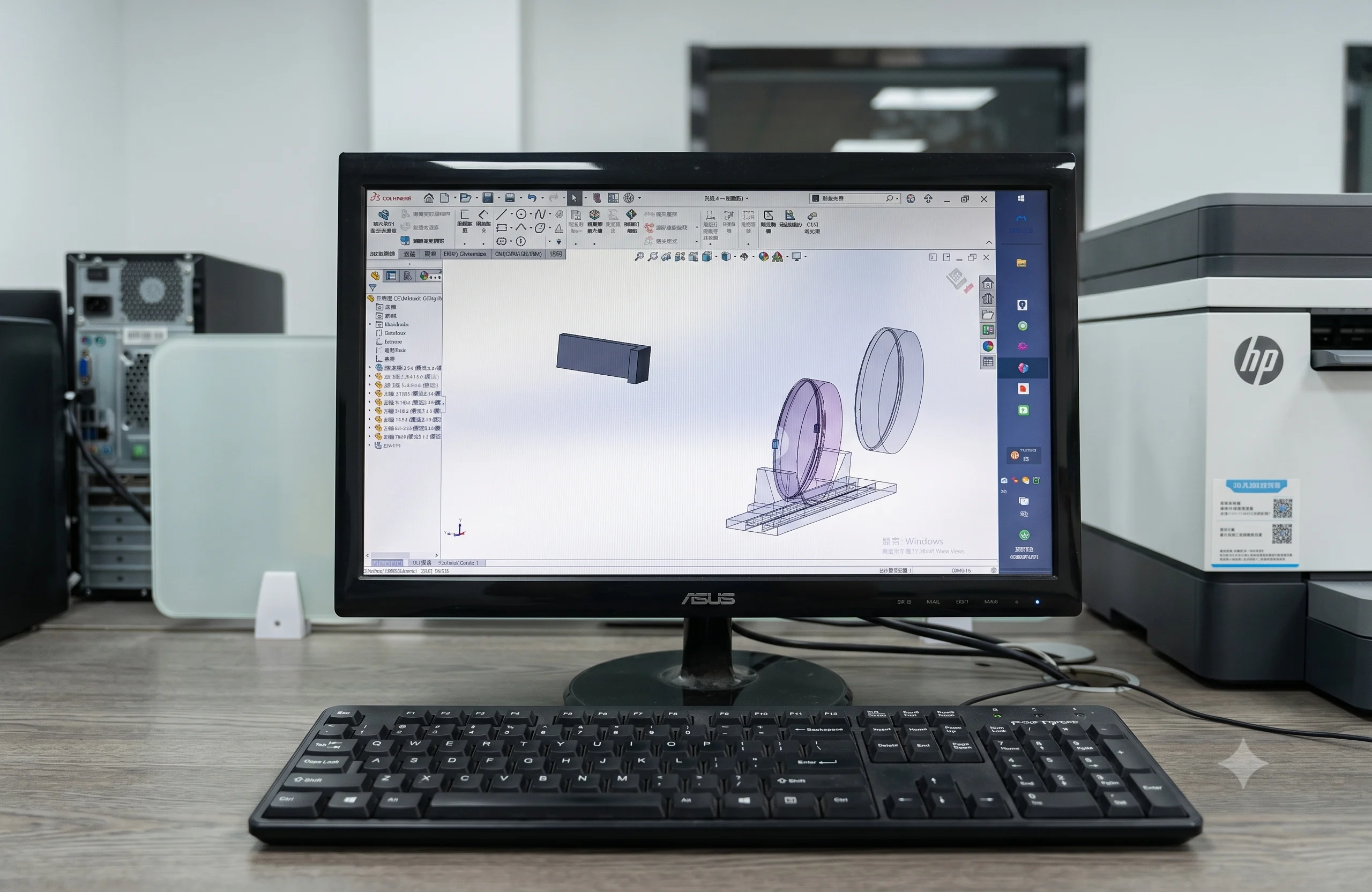
01. Design Phase
Based on optical simulation models, we predict and analyze key performance indicators such as wavefront error, MTF, and focal length deviation, and identify the impact of surface shape error, center offset, and thickness error on system performance.
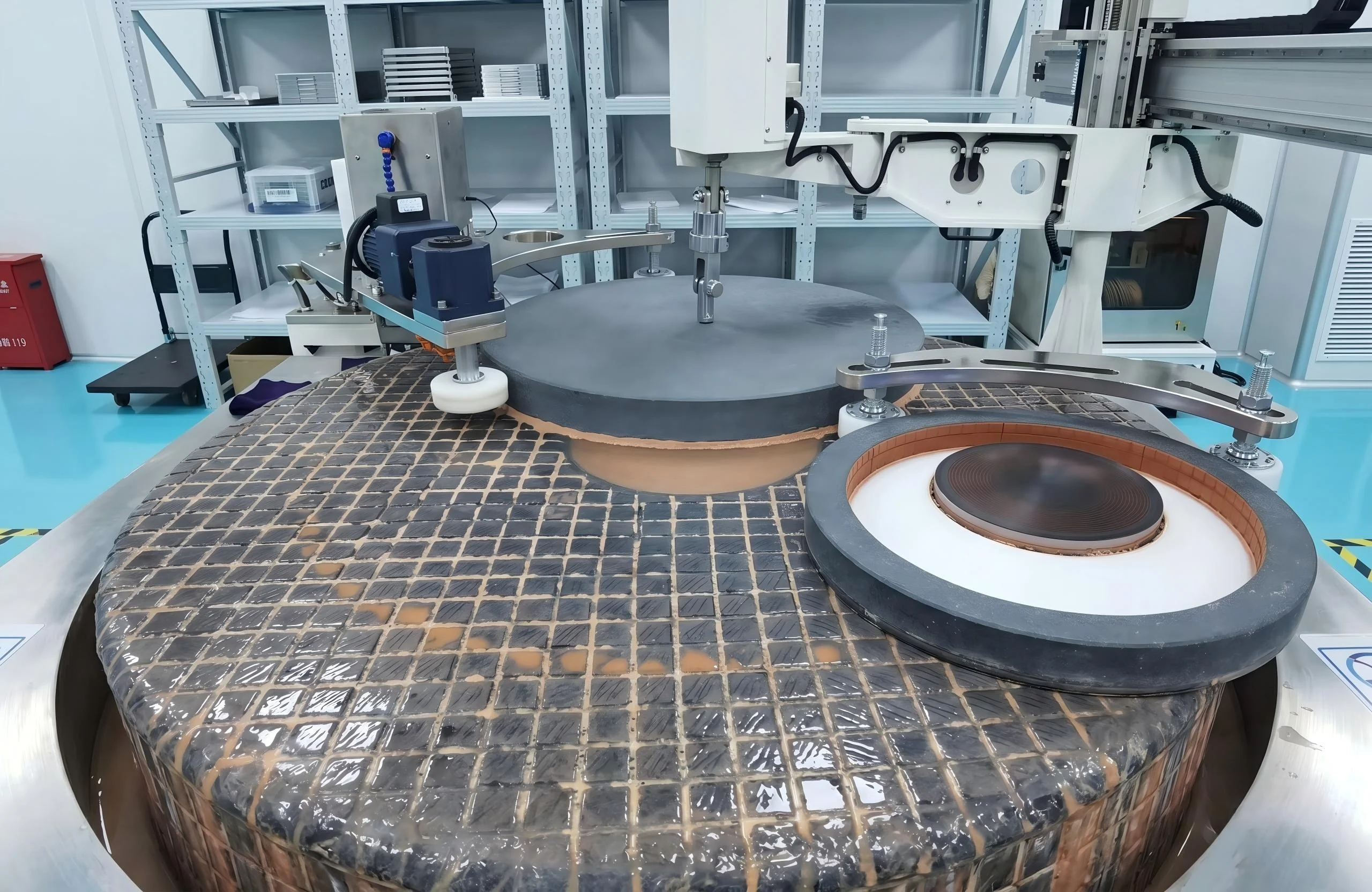
02. Machining Phase
During the manufacturing process, we implement full-process quality monitoring for rough grinding, fine grinding, polishing, and coating processes, and use interferometers, profilometers, and eccentricity meters for real-time dynamic feedback.
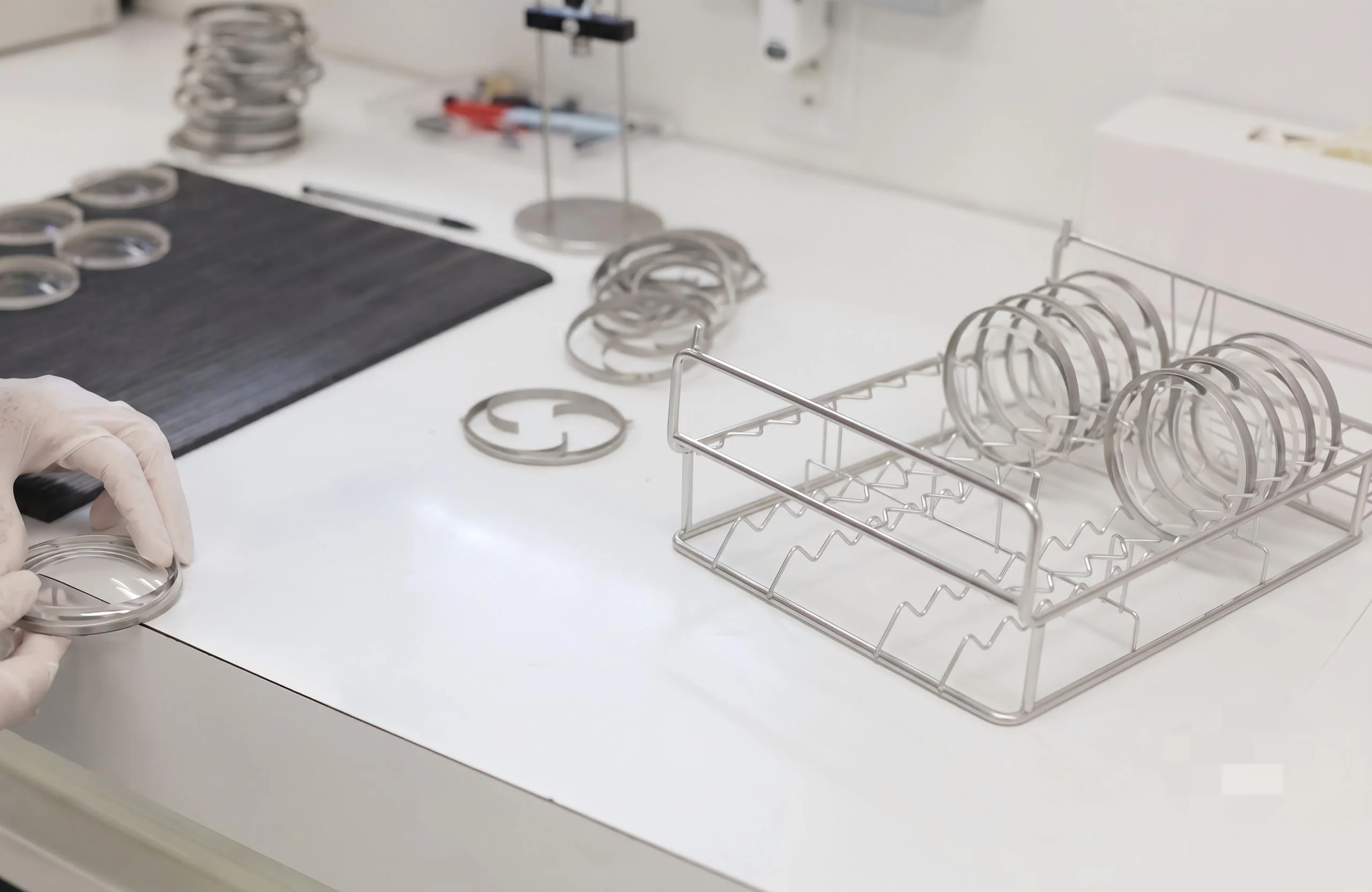
03. Finished Product Phase
We conduct 100% full-parameter testing on each product, including surface shape, dimensions, center offset, and transmittance, to ensure compliance with transmittance requirements and generate a complete test report.
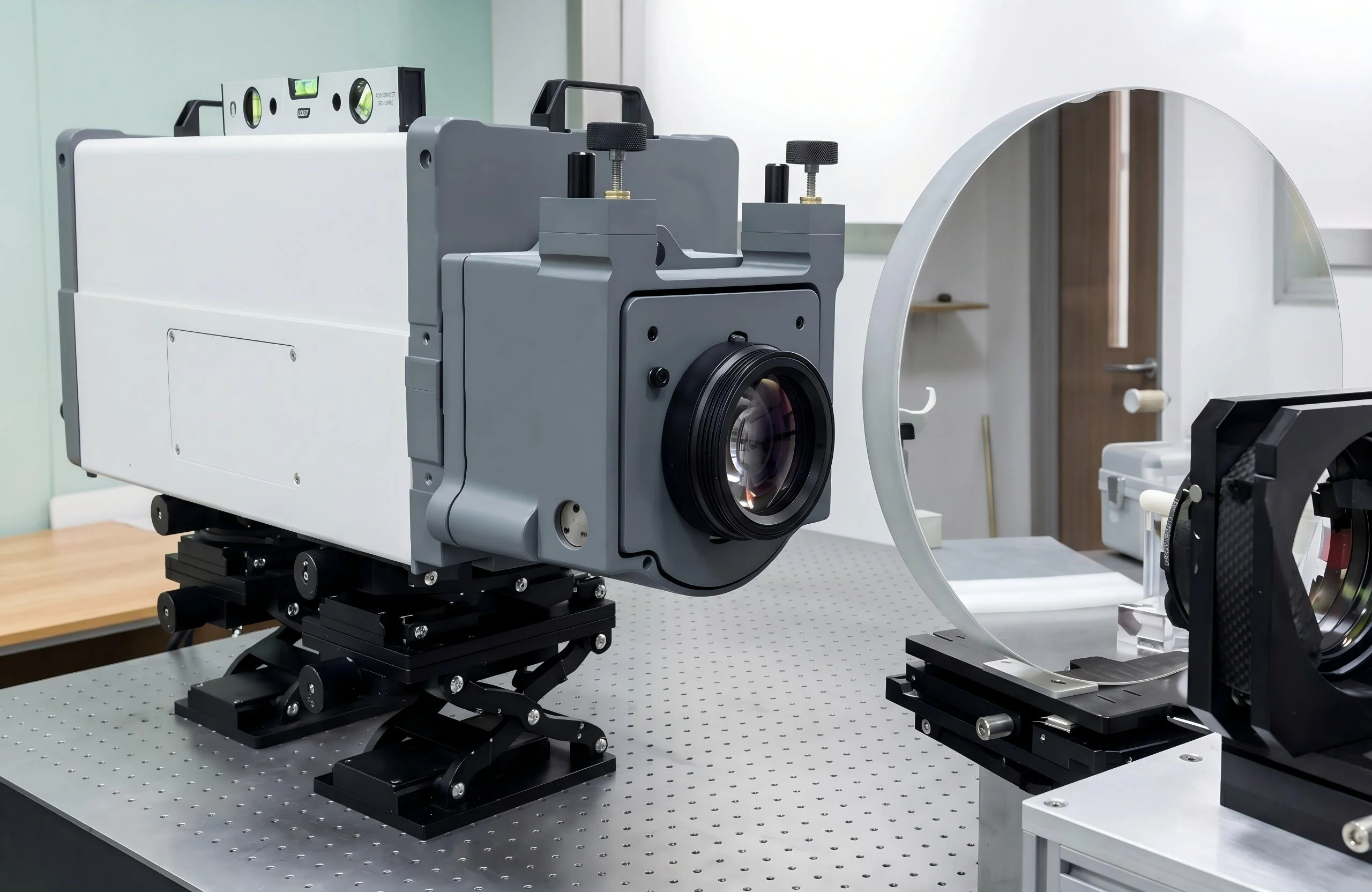
04. Post-Delivery
We have established a comprehensive data relationship system to archive all test data, such as batch and serial number information, supporting customers in retesting, benchmarking, and performance testing, and providing historical data for tracking.
Testing Equipment
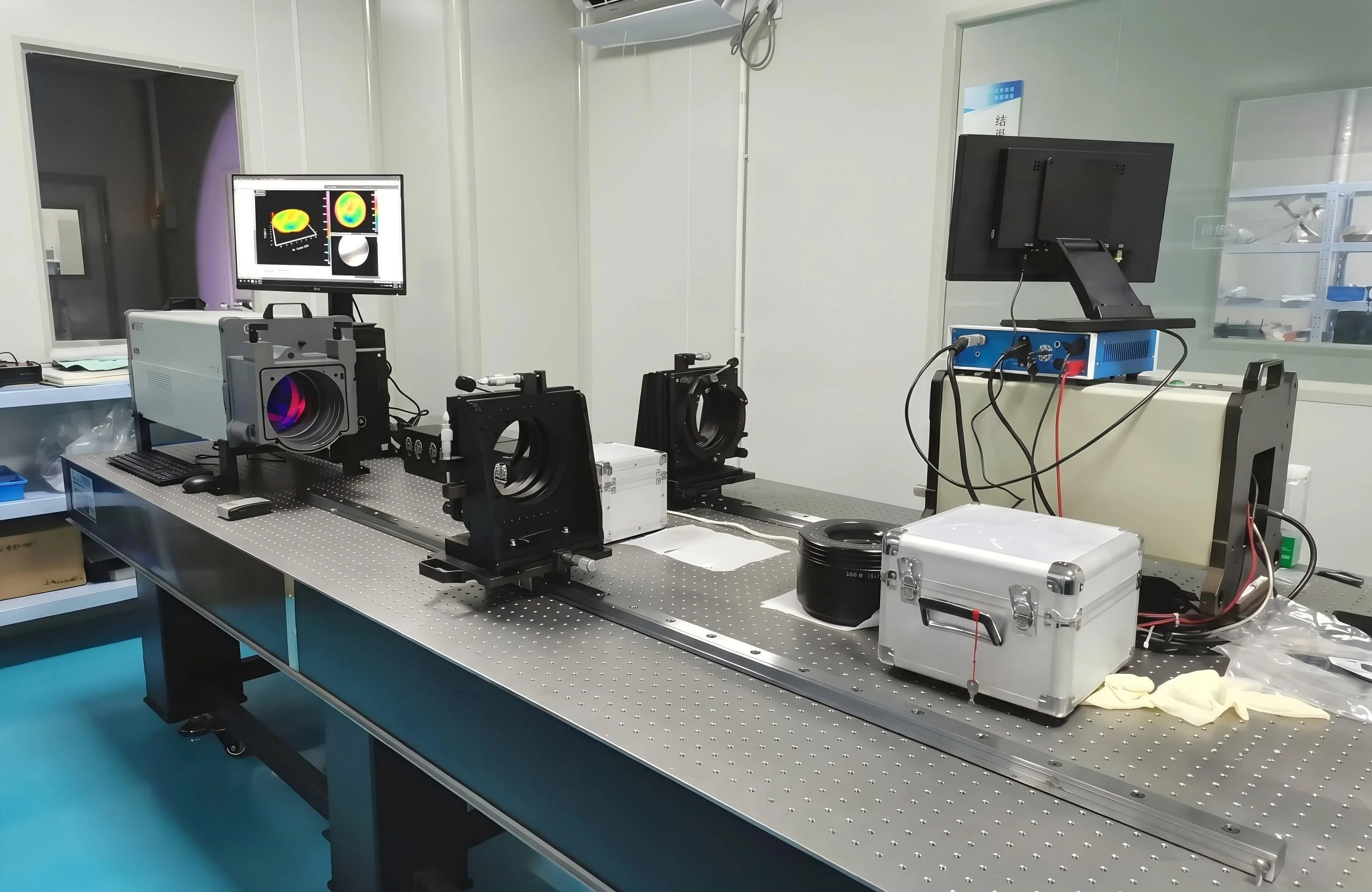
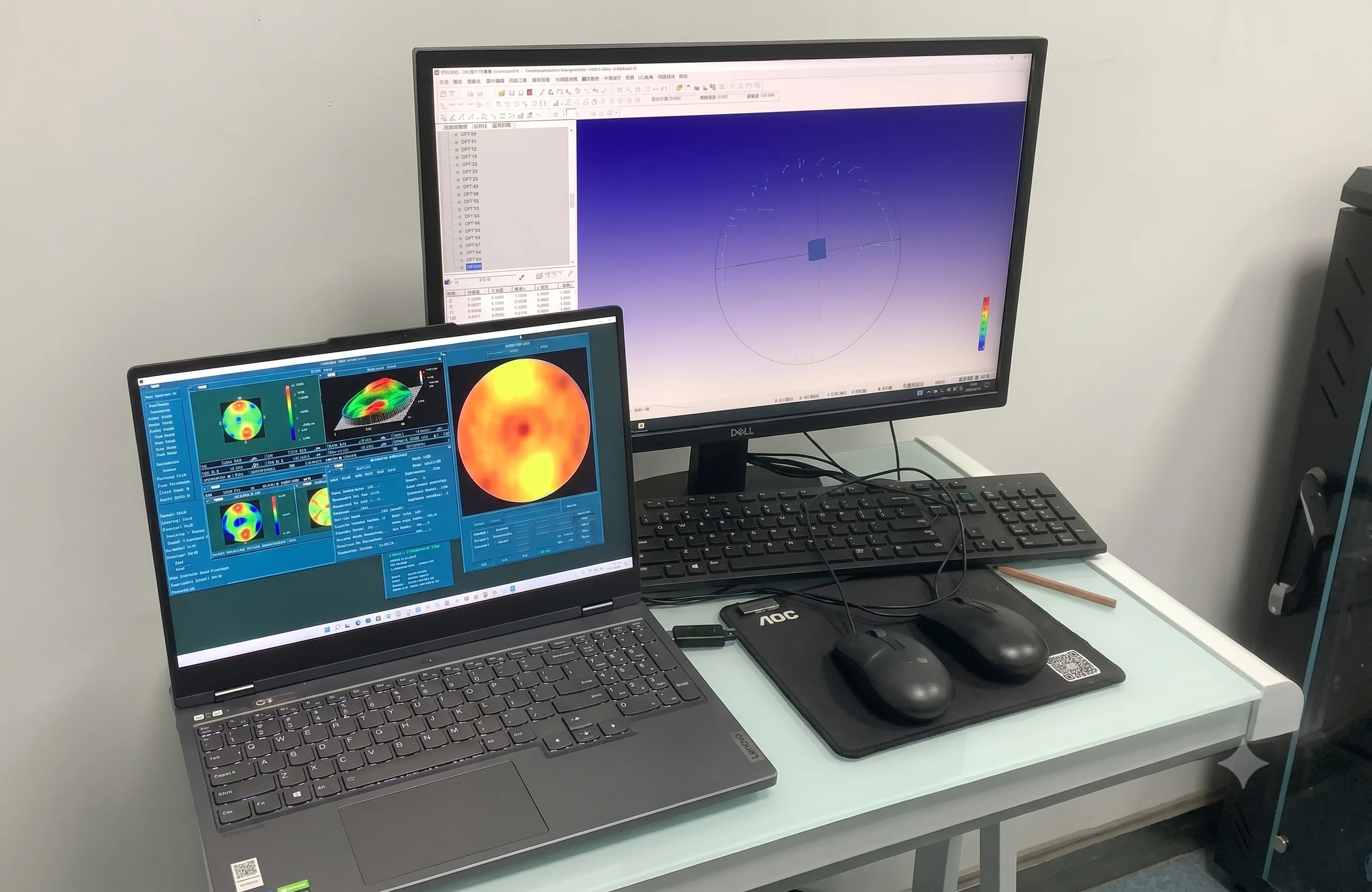
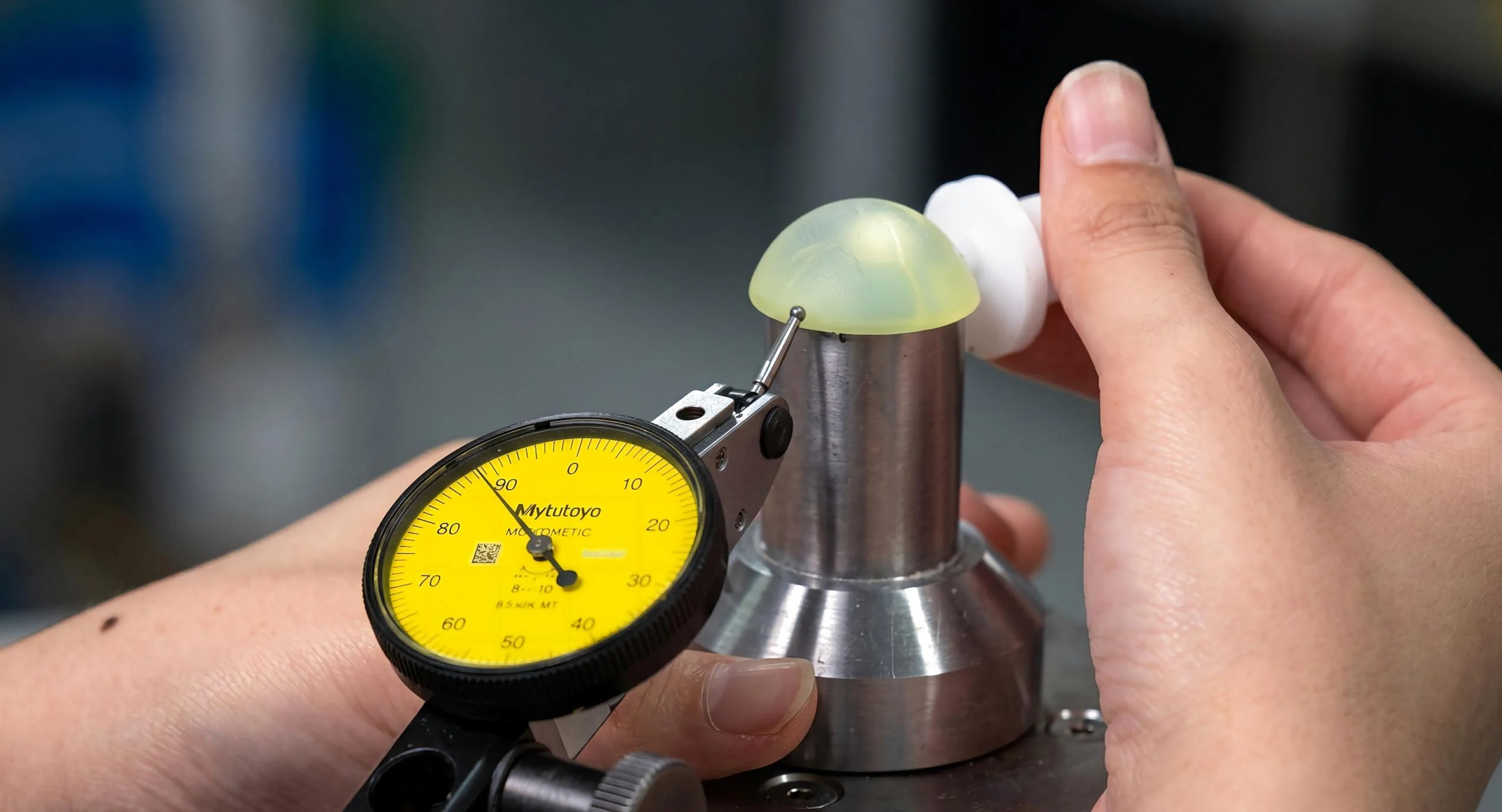
We are equipped with advanced instruments for full-parameter testing of optical components, covering technical specifications such as surface shape, roughness, geometric dimensions, and spectral characteristics.
Core Measurement Capabilities
Surface Accuracy: Better than λ/30
For spherical, planar, aspherical, and freeform surface components, we use a high-precision laser interferometer for full-aperture measurement.
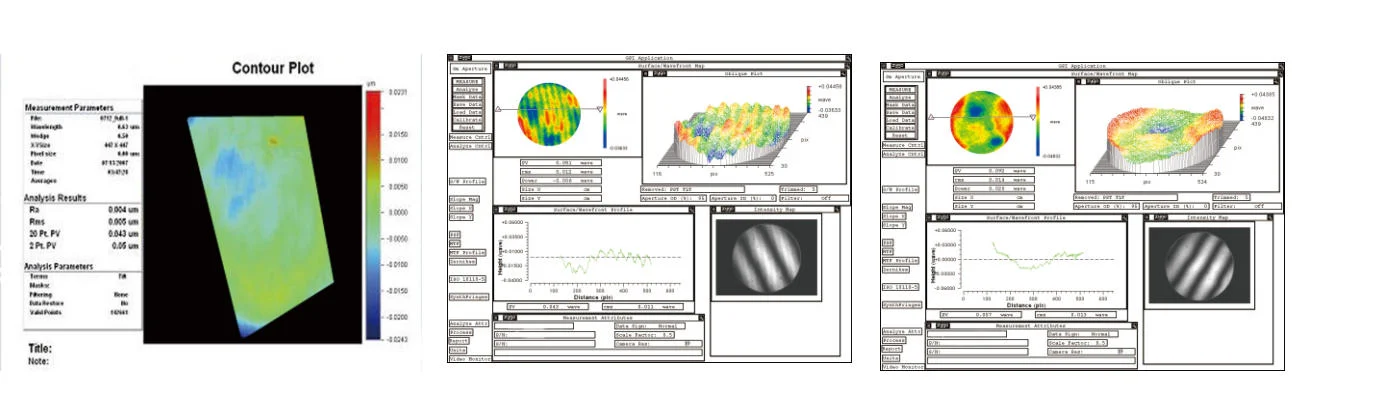
Ultra-smooth surface roughness: down to 0.1 nm (1 Å)
Ultra-smooth surfaces are core components of high-power lasers, ultraviolet optical systems, and X-ray optical elements. Surface roughness directly affects light scattering, energy loss, and laser damage threshold, making it a crucial indicator for evaluating optical components.
We employ a multi-scale collaborative measurement method using a white light interferometer (WLI) and an atomic force microscope (AFM).
WLI: Measures micrometer-level structures
AFM: Measures nm/Å-level details
Measurable parameters:
- S_a (arithmetic mean roughness)
- S_q (root mean square roughness)
- S_z (maximum height difference)
- S_k (kurtosis coefficient), etc
- Vertical resolution
- Lateral resolution
- Atomic step height
- Nanostructure profile
- Local roughness
Ultra-Smooth Surface Capability
Scratches and Pitting
We employ a high-sensitivity dark-field microscope combined with an automated image recognition system to assess the S/D level according to MIL-PRF-13830B or ISO 10110-7 standards. We perform 100% surface inspection on components and manually review boundary defects to ensure compliance with the most stringent surface quality standards.
Inspection Equipment:
* Dark-field microscope: Olympus/Nikon industrial microscope, equipped with 10×, 20×, and 50× objectives.
* Automated Defect Recognition System: Based on machine vision algorithms, automatically counts and classifies defects.
* Auxiliary Illumination: Ring LED illumination + coaxial illumination + dark-field illumination.
* Our Capabilities: Standard support for 40-20 level, precision up to 10-5 level, and ultra-precision up to 5-1 level.
Contact us today for your customized solution
We not only manufacture optical components, but also build your confidence in quality with data. Whether you need:
- ultra-smooth windows for high-power lasers;
- extremely low-scattering components for ultraviolet lithography systems;
- high-precision diffusers for medical and aesthetic devices;
- or any optical component with extreme requirements for surface quality, shape, and laser damage threshold;
our metrology team will work with you to define testing solutions, ensuring that every delivered component withstands the most stringent verification.