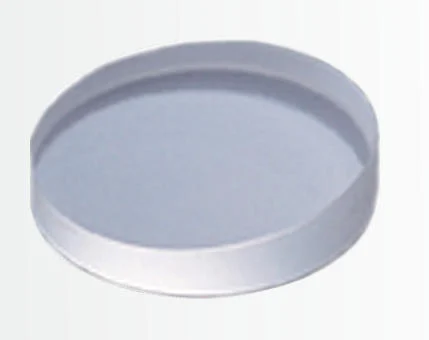
Fused Silica Wedge Windows Product Discription
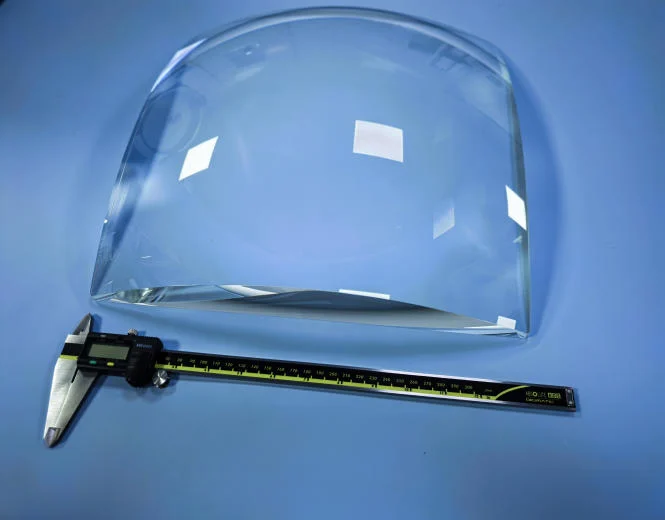
Fused silica wedge windows are optical components specifically designed to eliminate the etalon effect associated with parallel windows. By incorporating a slight wedge angle between the two surfaces, they separate reflections from the front and back faces, thereby preventing interference fringes from compromising beam quality or measurement accuracy. Asin Optics manufactures fused silica wedge windows and offers customization options covering materials, wedge angles, dimensions, and coatings.
We typically utilize JGS1 and JGS2 fused silica substrates for these wedge windows; however, we also offer infrared-compatible substrate materials—such as CaF2, ZnSe, and Silicon—upon request. Our precision laser beam steering wedges are widely used in a variety of laser systems.
Why Choose Our High Damage Threshold Fused Silica Wedge Windows
- We offer Laser Grade Wedge Substrates fused silica substrates characterized by high purity and uniformity; their low impurity and bubble content ensures superior wavefront quality.
- Our fused silica substrates maintain an exceptionally broad transmission range, delivering high transmittance from 185 nm to 2.1 µm.
- We provide a wide range of wedge angles, including standard options such as 30′, 1°, 2°, 3°, 4°, and 5°, as well as fully customized angles.
- Our manufacturing capabilities cover sizes ranging from ultra-small 5 mm micro-optics to large-format substrates up to 300 mm, available in circular, square, rectangular, and custom shapes.
- We offer diverse coating solutions, including high laser threshold anti-reflective (AR), beam-splitting, and high-reflectivity (HR) coatings spanning the UV to near-infrared spectrum.
- Except high damage threshold coating wedge windows, we also can provide uncoated blanked wedge windows for client.
Custom Capability Of Custom Wedge Angle Windows Precision Laser Beam Steering Wedges
Wedge Angle Windows Applications
Laser Interferometry and Spectroscopy
Parallel windows cause multiple reflections between their front and back surfaces, leading to interference. This introduces background fringe noise in interferometers and creates periodic “pseudo-absorption peaks” or baseline modulation in spectrometers. Fused silica wedge windows utilize a slight wedge angle to spatially separate the reflections from the front and back surfaces, thereby preventing interference and eliminating etalon fringes. This results in a flat baseline and enhanced spectral purity.
High-Power Laser Systems (Nd:YAG / Fiber Lasers)
High-power lasers (such as Nd:YAG at 1064nm/532nm or fiber lasers in the 1μm range) require windows with extremely low bulk absorption and very high damage thresholds; otherwise, thermal effects can cause wavefront distortion or even catastrophic failure (shattering). Furthermore, back-reflected light must be prevented from traveling back along the optical path. Thanks to the material’s ultra-high purity and the wedge design, fused silica wedge windows offer high laser damage thresholds while the wedge angle deflects surface reflections away from the main optical axis. This eliminates issues such as self-oscillation in pre-amplifiers, disturbances to the seed source, or burn spots on fiber end-faces caused by back-reflections.
Beam Steering
In beam delivery systems, parallel windows not only produce ghost images but also merely transmit the beam passively. Wedge windows utilize the principle of refraction to introduce precise angular and positional adjustments to the optical path. Rotating the wedge window around the optical axis alters the deflection of the transmitted beam, creating a passive, high-precision, and hysteresis-free mechanism for beam pointing adjustment. This enables finer control over beam direction compared to mechanical adjustments while simultaneously eliminating ghost images and stray light.