
Introduction Of High Power Laser System
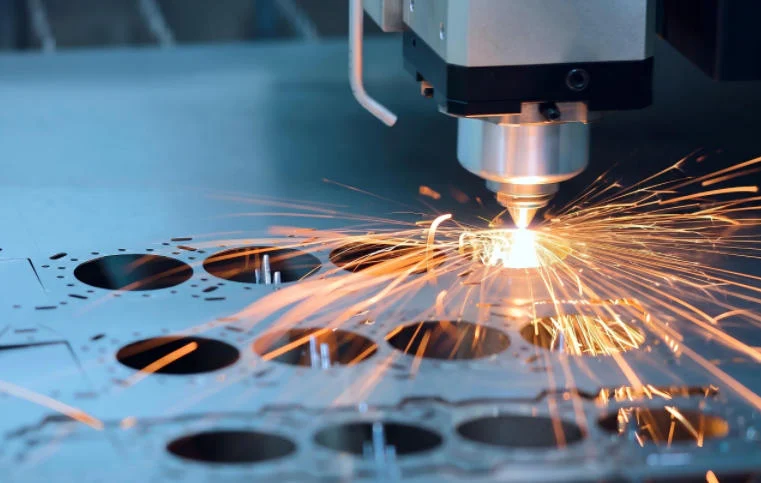
High-power laser technology is increasingly integrated into modern industry and cutting-edge scientific development. From multi-kilowatt laser cutting and remote laser cleaning to ultrafast precision machining and petawatt-class systems in high-energy physics, every application relies on optical components capable of withstanding intense laser energy while precisely controlling the beam. As a manufacturer deeply rooted in the optical components sector, Asin Optics understands that in high-power laser systems, the performance of every mirror, window, and focusing lens is critical to overall system stability.
I. Major Types of High-Power Laser Systems
- Solid-state lasers: Rod, slab, and thin-disk lasers capable of extremely high power output while maintaining diffraction-limited beam quality.
- Fiber lasers (1060 nm–2000 nm): Utilizing Master Oscillator Power Amplifier (MOPA) configurations to generate multi-kilowatt power levels.
- Semiconductor lasers: High-power diode arrays serving as pump sources for solid-state lasers.
- Gas lasers: CO₂ and excimer lasers capable of delivering hundreds to thousands of watts of output power in the mid-infrared or ultraviolet spectral ranges.
II. Application Sectors for High-Power Lasers
High-power lasers are primarily utilized in the following sectors:
- Industrial manufacturing: Applications such as fiber laser cutting of thick plates, laser welding (including handheld systems), drilling, marking, and surface hardening.
- Industrial processing: Use of ultrafast picosecond and femtosecond lasers for cutting and drilling glass, ceramics, and sapphire.
- Scientific research facilities: Petawatt-class laser systems and high-repetition-rate pump-probe systems.Medical: High-precision surgical equipment, such as laser scalpels and dermatological treatment devices.
- Semiconductor: Applications in extreme ultraviolet (EUV) lithography and attosecond science.
- Defense: Remote sensing, laser ranging, and free-space optical communication for high-energy laser directed-energy systems.
These laser systems demand optical components that maintain low absorption losses at power levels ranging from kilowatts to tens of kilowatts. Furthermore, they impose stringent requirements regarding wavefront distortion, laser-induced damage thresholds (LIDT), repetition rates, and the ability to handle high average power. To address these challenges, a comprehensive upgrade across the entire value chain—from material selection and machining precision to coating technology—is essential; this is precisely where the value of our optical component products lies.
III. Functional Classification of Optical Components in High-Power Laser Systems
Components are primarily categorized into two groups: intracavity and extracavity.
Intracavity components include: total reflectors, output couplers, prisms, and filters.
Extracavity components include: beam expanders, beam shapers, polarizers, and protective windows.
IV. Asin’s Offerings for High-Power Lasers and Core Optical Components
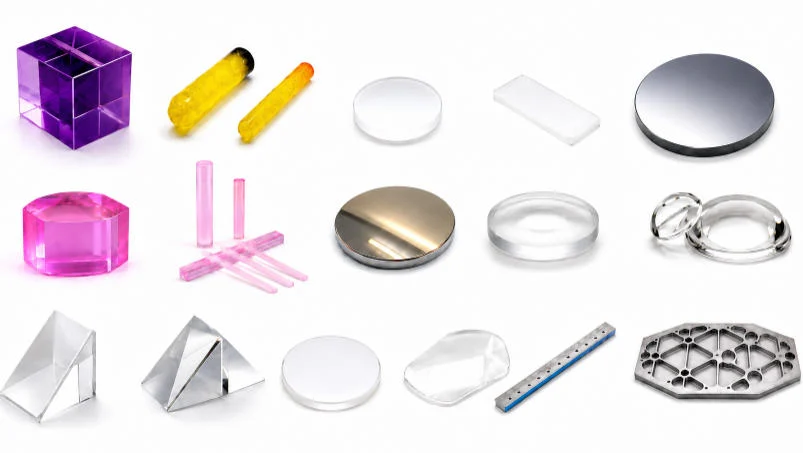
Our products are specifically engineered to meet the rigorous demands of high-power laser systems. As laser power scales to the hundred-watt, kilowatt, or even ten-kilowatt range, even minute levels of absorption convert into heat. This heat induces thermal lensing, coating cracking, or substrate deformation, ultimately leading to beam quality degradation and permanent component damage. Our primary product offerings include:
1. High-Laser-Damage-Threshold (LIDT) Laser Mirrors
We utilize ultra-low-absorption substrates—such as fused silica or glass-ceramics—combined with ion-assisted sputtering or ion-assisted coating technologies to produce high-reflectivity dielectric mirrors. These mirrors achieve typical LIDT values exceeding 30 J/cm² at wavelengths such as 1060 nm and 1030 nm, making them particularly suitable for Q-switched lasers and ultrafast laser amplification stages.
2. Low-Absorption Laser Protective Windows
We offer protective windows made from materials such as fused silica, sapphire, and ZnSe. These feature high-LIDT anti-reflective coatings on both sides to ensure stable absorption coefficients.
3. High-Precision Aspheric Focusing Lenses
We provide aspheric focusing lenses manufactured via precision cold-processing/polishing or molding, with material options including fused silica and infrared glass. These lenses are designed to withstand the thermal challenges associated with high-power operation (hundreds to tens of thousands of watts), preventing issues such as thermal lensing, coating failure, and substrate deformation that compromise beam quality and component integrity.
4. High-Precision Optical Lenses
In high-power laser systems, lenses are critical for ensuring the precise and efficient transmission of laser energy onto the target. We specialize in manufacturing spherical lens assemblies with high laser-induced damage thresholds (LIDT) for industrial and ultrafast laser applications, including plano-convex and biconvex lenses used for collimation, beam expansion, and beam reduction.
V: Guide to Customizing High-Power Optical Components
To customize optical components for your specific application needs, please provide the following information:
1. Laser Parameters: Specify the wavelength, operating mode (CW/pulsed), power/energy density, pulse duration, and repetition rate; these factors directly determine the choice of substrate material and coating type.
2. Environmental Conditions: External factors such as temperature, humidity, contaminants, and vibration can affect the service life of the components.
3. Beam Quality Requirements: If the system has strict requirements regarding wavefront distortion, scattering loss, or polarization state, components with higher surface figure accuracy and superior coating processes will be required.
We possess a comprehensive evaluation system for high-power laser optics and offer a one-stop service—ranging from simulation, component selection, and prototyping to mass production—tailored to your specific parameters. We are equipped to respond quickly to requests for standard products, custom dimensions, or specialized wavelength coatings.
