The Advantage Of Fused Silica Material
In the modern imaging and laser optical components industry, the term “quartz glass” typically refers to fused quartz. Fused quartz offers significant advantages in optical systems, primarily due to its extremely low coefficient of thermal expansion, excellent thermal resistance and chemical stability, as well as an extremely high laser damage threshold in high-power applications.
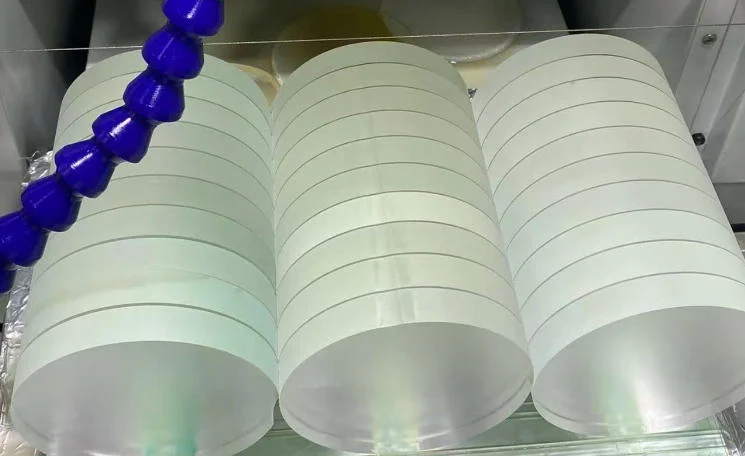
Classification of Major Grades of Chinese Optical Quartz Glass
In China, quartz is primarily classified into three core grades based on manufacturing processes, hydroxyl (OH) content, and metal impurity levels:
JGS1 Far-Ultraviolet Optical Quartz Glass
JGS2 is synthesized using high-purity chemical raw materials. It is extremely pure, contains virtually no bubbles, and has an extremely high hydroxyl (OH) content (approximately 1,000–2,000 ppm), resulting in excellent transmittance (greater than 90%) in the deep ultraviolet region (185 nm–250 nm). Its main limitation is an OH absorption peak near 2.73 μm in the infrared spectrum.
Internationally equivalent grades include: Corning HPFS 7980 and Heraeus Suprasil 1/2
JGS2 UV/Vis Quartz Glass
JGS2 is produced by melting and gas-purifying natural crystalline quartz. It is suitable for the 220–2500 nm wavelength range. JGS2 has a lower purity than JGS1 but offers a cost advantage.
International equivalents include: Heraeus Homosil, Dynasil 1000–6000 series
JGS3 is an infrared optical quartz glass
JGS3 is specifically designed for broadband and infrared transmission, with extremely low hydroxyl content (< 1–5 ppm). It offers high transmittance in the 260–3500 nm range and eliminates the water absorption peak near 2700 nm.
International equivalent brands include: Heraeus Suprasil 300, etc.
When searching for optical component manufacturers in China that use quartz glass as their material, nearly all such manufacturers will select from the JGS1, JGS2, or JGS3 grades based on the customer’s specifications.
Major supplier of quartz glass materials in China
There are six major quartz glass manufacturers in China:
Hubei Feilihua
It is one of the leading domestic quartz glass manufacturers, primarily producing JGS1-grade synthetic quartz, semiconductor quartz, and optical quartz materials
SAURRS
It specializes in UV-grade synthetic fused quartz (JGS1 and others), large-size fused quartz, and fused quartz for high-energy lasers. Its products are primarily used in precision optics, lithography, and semiconductor applications
Jiangsu Pacific Quartz Co., Ltd.
It engages in the R&D and production of high-purity quartz sand, high-purity quartz tubes, rods, plates, ingots, cylinders, quartz crucibles, and other quartz materials, which are used in the semiconductor, photovoltaic, optical fiber, and optoelectronic industries.
Quickgem
It specializes in high-end quartz materials, quartz for optical fiber preforms, and quartz for optical communications and semiconductors. It is the only company in China capable of producing liners and sleeves for optical fiber preforms.
Nantong Crystal Co., Ltd.
It focuses on synthetic quartz glass with high uniformity and high purity; suitable for JGS1-type synthetic quartz and materials for precision optics and lasers.
Chengdu Guangming Optoelectronics (CDGM)
It can provide optical glass in multiple grades.
Key Applications of Fused Silica in Asin Optics Optical Components
JGS1 is used for UV aperture plates, DUV/UV lenses, UV prisms, laser windows, beam splitters, and filter substrates, primarily in applications such as UV systems, fluorescence detection, and semiconductor lithography.
JGS2 is used for general-purpose quartz windows, protective covers, visible light and near-infrared lenses, prisms, mirrors, and other applications in general laser systems, imaging, and industrial inspection.
JGS3 is primarily used for infrared windows, infrared lenses, infrared prisms, substrate for infrared filters, infrared laser windows, and other near-infrared and mid-infrared applications.
Quartz Glass Procurement and Material Selection at Asin Optics
Asin Optics procures different types of quartz glass to manufacture optical components based on the specific application requirements of each customer. Our suppliers include the well-known domestic suppliers listed above, as well as quartz glass imported from outside China. We currently collaborate with, but are not limited to, companies such as Schott, Corning, and Heraeus.
In our production process, we typically use quartz glass for the following types of optical components:
- High-power laser mirror substrates
- Precision spherical lenses, cylindrical lenses, and aspheric lenses
- Various laser protection windows, such as those used in laser cutting, laser welding, or 3D printing to shield against external environmental factors
- Optical prisms and optical beam splitters
- Optical filters, etc.
- Ultra-polished optical components, etc.
Manufacturing Process for Asin Optics’ Fused Silica Optical Components
We understand the manufacturing processes and challenges faced by optical component manufacturers, and we approach the process flow from the following perspectives:
1) We employ a multi-step polishing process with progressively finer grits, typically starting with CNC milling using diamond-coated tools, to prevent microcracks and subsurface damage on the quartz surface caused by its high hardness and brittleness. This prevents cracks resulting from residues and damage from triggering catastrophic failure under high-power lasers.
2) We use superpolishing to remove residual absorption layers from the quartz surface, achieving an extremely smooth surface with a surface roughness of less than 1 Å (< 0.1 nm), enabling it to withstand extremely high laser power.
3) When customers require lenses, mirrors, or window plates with a surface profile of λ/20, we employ magnetorheological polishing and ion beam profiling to resolve surface waviness issues at high frequencies.