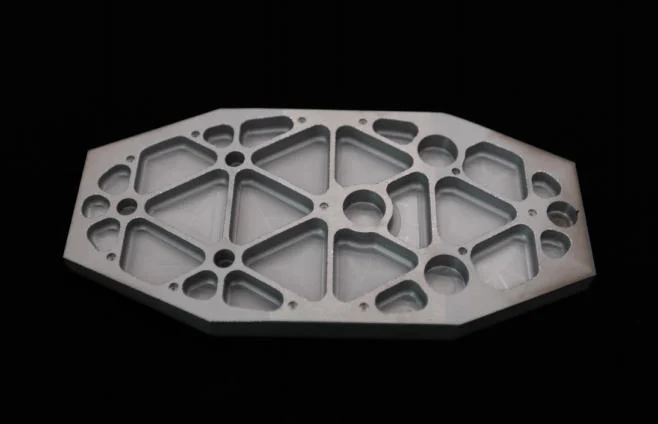
Lightweight Silicon Carbide Sic Mirror Product Discription
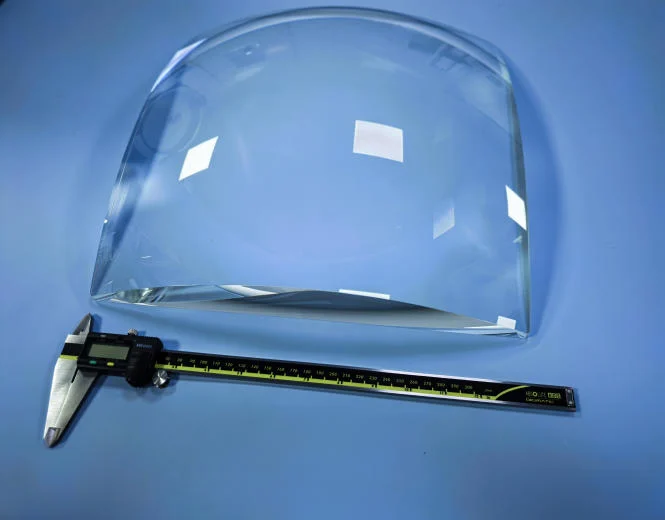
Lightweight silicon carbide mirrors are fabricated from silicon carbide material through a process of precision machining and polishing. They are characterized by their lightweight nature, high rigidity, and low thermal expansion. Asin Optics specializes in the R&D and manufacturing of high-performance, lightweight silicon carbide mirrors. We offer a comprehensive, one-stop solution encompassing polishing, coating, and metrology. Utilizing an open-cell honeycomb structure, these mirrors achieve a weight reduction of over 80% while maintaining a surface figure accuracy of 1/20λ and exceptional surface roughness precision. They are ideally suited for applications in space optics, high-energy laser systems, and cryogenic infrared systems.
High-stiffness silicon carbide Sic Mirros Product Features
- With a Young’s modulus exceeding 400 GPa and a density below 3.2 g/cm³, SiC enables the fabrication of products with larger apertures and reduced weight.
- Silicon carbide possesses an exceptionally low coefficient of thermal expansion, allowing the surface figure of mirrors to remain invariant across a wide range of temperatures, thereby ensuring extremely high stability.
- Through precision CNC machining, we are able to realize both closed-back and open-back lightweight structural designs, achieving weight reductions of over 80%.
- We are capable of delivering mirror surface precision of up to λ/20; consequently, we can provide high reflectivity and high imaging resolution to meet the rigorous demands of lightweight optics for both scientific research and industrial laser applications.
Why Choose Asin For Your Lightweight Sic Optics
- We employ precision cutting processes—utilizing CNC machining\dimond tuning and lightweighting techniques—to ensure the dimensional accuracy of the mirror body.
- Furthermore, we utilize nanoscale IBF polishing processes to enhance surface cleanliness and minimize light scattering.
- We possess a comprehensive inspection system, incorporating interferometers and profilometers, to guarantee the global accuracy and stability of the mirror surface.
- We can customize the mirror’s diameter, thickness, shape, and lightweighting scheme according to client specifications, while also offering flexible delivery schedules.
Custom Capability Of Silicon carbide reflector
Silicon carbide reflector Applications
-
Laser LiDAR
The core bottleneck in LiDAR technology is the dynamic performance of large-aperture scanning/receiving mirrors. While traditional aluminum mirrors are lightweight, they suffer from significant thermal distortion and limited surface accuracy; glass mirrors, on the other hand, have high moments of inertia, which limit scanning frequency. Silicon carbide mirrors, with their ultra-high specific stiffness, allow large-aperture mirrors to maintain near-diffractive surface profiles even during high-speed sweeping or rotation. At the same time, their thermal conductivity rapidly dissipates residual heat from laser absorption, preventing wavefront distortion caused by the thermal lensing effect. This makes them ideal optical components for long-range autonomous driving radar, atmospheric wind field measurement, 3D mapping, and satellite-borne laser altimeters.
-
High-Power Lasers
Conventional materials suffer from thermal lensing and wavefront distortion due to thermal expansion, causing a rapid deterioration in beam quality and even mirror damage. Silicon carbide possesses a thermal conductivity close to that of copper, a low CTE, and a high elastic modulus, allowing it to rapidly conduct and dissipate heat after absorption, thereby controlling thermal deformation to the nanometer scale. This means that SiC mirrors can maintain near-cold-state optical performance while withstanding continuous-wave laser irradiation of several thousand to tens of thousands of watts.
-
Lithography System Components
In extreme ultraviolet (EUV) lithography systems, all optical components are reflective, operating at a wavelength of 13.5 nanometers. This requires mirror surface accuracy at the atomic level, along with sub-nanometer stability under conditions of multilayer coating stress, high vacuum, and heat generated by exposure. Due to its low CTE (similar to silicon, which facilitates multilayer coating compatibility), extremely high specific stiffness, and outstanding thermal conductivity, silicon carbide is an ideal candidate for mirror substrates in EUV mask stages, illumination systems, and projection objectives.